Planning a safari in South Africa is exciting, but it also comes with a lot of questions. Ones that should be asked before you book a South African safari.
From travel times and safety to malaria, seasons, costs, and what a safari actually feels like day to day, most travellers want answers before they’re ready to enquire.
This guide is based on nearly two decades of hands-on safari experience and covers the most common (and most important) questions we hear from first-time and repeat safari travellers alike.
Prefer a printable version you can save or share?
👉 Download the full Safari FAQ PDF here.
1.) Travel Logistics
1.1. How do I get to Kruger — by car or plane?
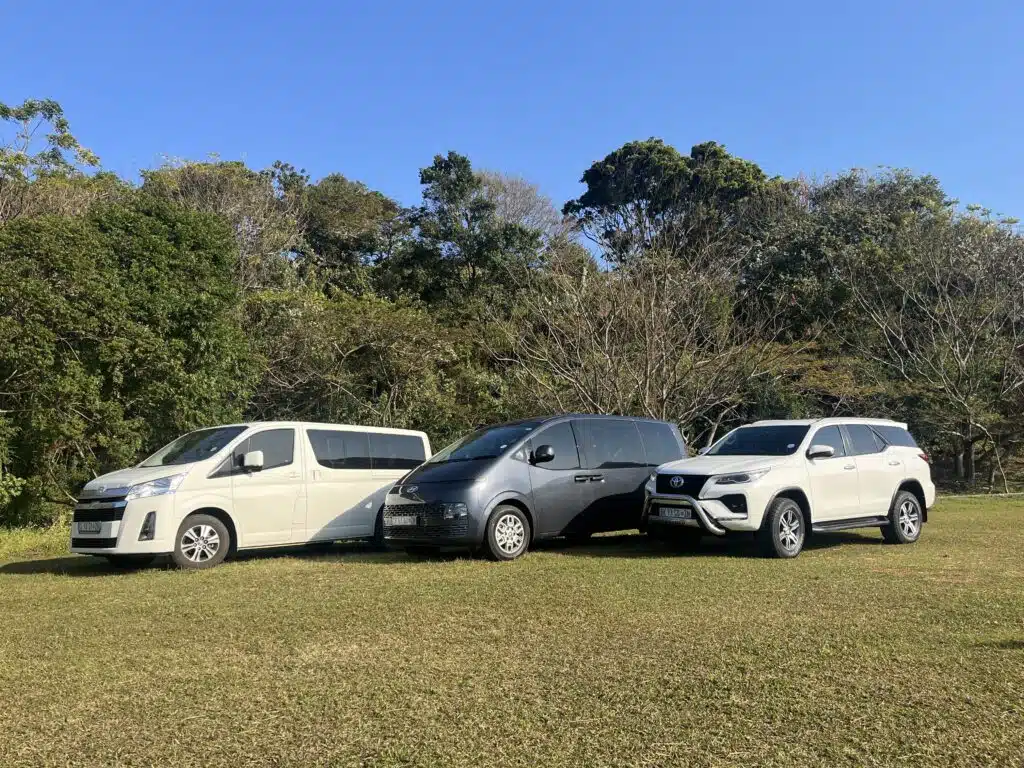
You can fly into Skukuza, Nelspruit (KMIA), or Hoedspruit, or drive from Johannesburg (4–5 hours). We recommend an included private transfer so you don’t have to worry about the drive, and it’s guided, meaning you’ll learn about the area’s history, landscapes, and industries as you go.
1.2. Is driving myself safe?
Yes, the main highways are safe and tarred, but traffic can be heavy and long stretches are tiring. You do need to drive defensively and expect the unexpected. Just because there is a law in place does not mean it will be adhered to, this is Africa after all. Many guests prefer transfers so they can relax, avoid navigation stress, and enjoy the journey.
1.3. How long does it take to reach Kruger?
From Johannesburg, it’s around 4–5 hours by road; from Durban, 8–9 hours. That’s driving time only, you’ll still need rest stops. Flights from Joburg are about one hour; from Durban, just under two.
1.4. Where do safari tour operators pick up and drop off?
Most operators pick up from major airports (JNB, DUR, KMIA, Skukuza) and hotels in Durban or Johannesburg. On private trips, pickup times are confirmed at booking and built around your requirements.
Tip: Keep in mind when booking flights to try fly in before noon and leave late afternoon to evening. This ensures you do not miss out on any safari time and also makes sure you adhere to the reserve’s opening and closing times.
Group tours usually depart around 9–10am sharp. If you arrive late, you may need to overnight in Johannesburg and join the next day. Private operators typically offer door-to-door pickup and drop-off in and around Johannesburg.
In short: group tours run on fixed schedules; private safaris run on yours.
1.5. Are there hotels near the airport?
Yes, especially in Johannesburg. Any hotel with “OR Tambo” in the name is ideal for late arrivals or early departures. Most offer frequent shuttle services running from the first scheduled flights through to the last arrivals. It’s still a good idea to notify your hotel of your flight time.
1.6. How do I find my guide at the airport?
Very easy. We’ll meet you in arrivals with a name board, no guessing games. Walk to the back of arrivals, where the operators line up, find your name, and you’re on your way.
2.) 🗺 Safari Planning & Experience
2.1. How many days do I need for a safari?
4–5 days is the sweet spot for first-timers. You’ll cover different areas and increase your chances of seeing the Big 5 without feeling rushed. The longer you stay, the better your odds (like fishing — you need bait in the water), and the more time you have to relax and take it all in.
2.2. What’s the difference between a group and a private safari experience?
A group safari runs on a fixed schedule with other guests. It’s usually more budget-friendly and social, but timings and routes are set, you move at the group’s pace.
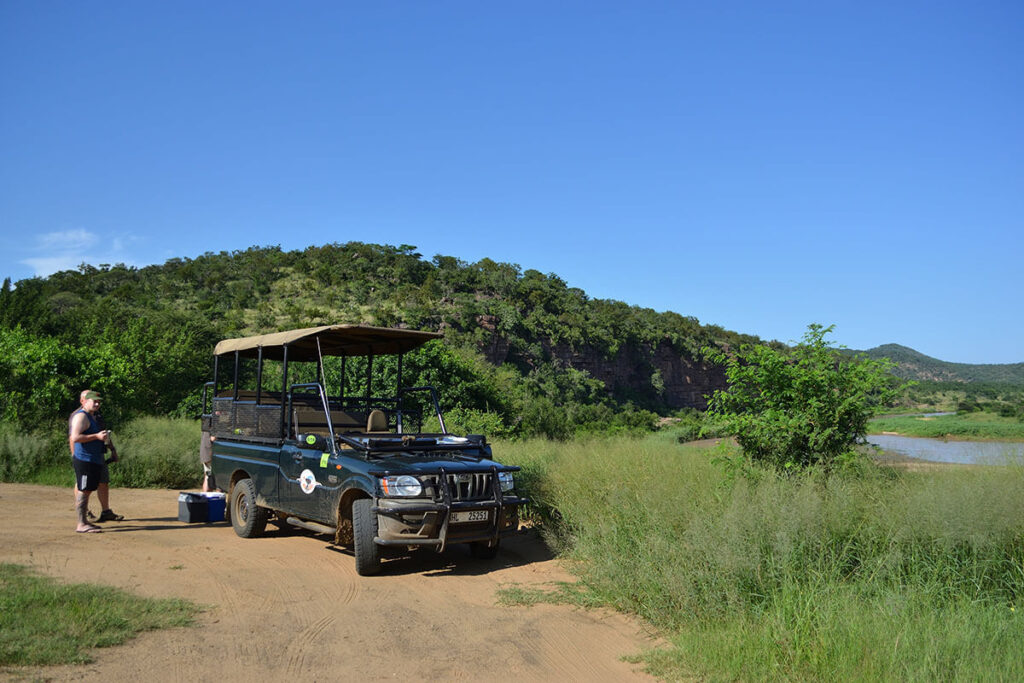
A private safari is flexible and personal: it’s just you (and your travel group) with your own guide and vehicle. Some game drives may still be shared depending on what you book, so check your itinerary carefully. Upgrading to a private open safari vehicle can be expensive for a couple but very reasonable for a group, especially four or more travellers.
2.3. What’s the difference between shared and private game drives?
Shared drives include other guests, fixed schedules, and less flexibility. Private drives are just for you, with your own guide and vehicle; you set the pace and timing, which is especially useful with young children.
A major advantage people often overlook is that your private guide can tailor each drive to what you still want to see, staying longer at sightings, focusing on new species, and skipping animals you’ve already encountered.
2.4. What time do game drives start and end?
Morning drives leave at sunrise; afternoon drives start mid-afternoon and end at sunset. Full-day tours run from sunrise to sunset with breaks for meals and even a longer break over the heat of the day if you so choose.
Open-vehicle drives with Kruger start before sunrise and end after sunset, which is their main draw card, being out in the reserve with no other vehicles. However, they are shared and run on strict schedules. Private guided drives are more flexible, allowing you to choose timing and length.
2.5. Which part of Kruger is best — north or south?
The south and central areas are known for higher wildlife density and Big 5 sightings. The north is quieter and more remote, with some lower-density wildlife sections, but in the right areas, sightings can be just as good. Both are excellent; it depends on your style.
2.6. Should I stay inside the reserve camps or outside in a lodge?
The usual thinking is inside Kruger for a more authentic, nature-focused experience. Outside lodges mean more modern comforts.
Our stance is to stay inside the park. Accommodation is clean and comfortable (and you’re rarely in the room anyway), and you maximise time in the wilderness. You also drive straight out on safari instead of commuting to gates, queuing, and paying entrance fees each day, which is time-consuming.
Note: This is different from private reserves adjacent to and part of Greater Kruger or standalone Big 5 reserves, where all drives take place within that reserve. So with these, there will also be no road transfers.
2.7. What is the accommodation like in the reserve camps?
Camp accommodation is simple, clean, and comfortable, as mentioned.
- Bungalows (2–3 sleeper): thatched units, usually with an outdoor kitchen.
- Family cottages (4–6 sleepers): more space with larger kitchens, lounge areas, and patios.
- Guest houses (6–12 sleeper): ideal for bigger groups, more expensive, and must be requested and may carry a surcharge.
All options are en-suite and more than sufficient when most of your time is spent game driving or in common areas.
2.8. How many camps should we stay in?
If you’re staying four nights or more, splitting between two camps adds variety. Shorter trips often work best from one base. For stays of six nights or more, three camps offer a fuller Kruger experience and the opportunity to see a variety of habitats, ecosystems and landscapes.
2.9. Can we visit Blyde River Canyon / the Panorama Route on the way?
Yes, we can build it into your transfer if time allows. If you want to do it properly, rather than rushing the viewpoints, adding an extra night is well worth it. There are also a bunch of activities to add, over and above the sightseeing.
2.10. When are peak seasons and holidays?
By far the busiest time is the two weeks over Christmas and New Year. Second, is Easter (mid-April) and a few more public holidays around that time also make it a very busy period. International peak season runs from late June to early October, with South African school holidays overlapping in July. If you prefer a quieter safari, avoid these periods.
2.11. When is the best time to visit — what are the seasons?
For eastern South Africa (Kruger, Eswatini, Hluhluwe-iMfolozi, St Lucia, and KZN), winter is often considered best: cooler, dry, and excellent game viewing because of the sparse nature of the vegetation (July–August).
Late autumn (late April–early June) and spring (September–early November) are milder, less busy, and particularly beautiful. Spring in particular is wonderful, as the temps are warming up but mild, the bush is still sparse, but early rains are bringing the new greenery, and the migratory birds are starting to arrive.
Summer (December–February) is hot and humid with thicker vegetation, but sightings remain excellent, especially early in the morning when animals are active and like to use the road to avoid the thick bush.
2.12. How early should I book?
Peak periods book out early, especially July and December. For the best camp availability inside Kruger, aim to book a few months in advance, at least 6, to avoid disappointment. That being said, we’ve had people decide last minute to travel and we’ve made it happen. Kruger is a huge place, and we are super experienced at finding and organising the best possible safaris, no matter the circumstances.
2.13. How physically demanding is a safari?
Most safari time is spent in the vehicle and is not physically demanding. If you can comfortably get in and out of a vehicle and manage early mornings, you’ll be fine. Let us know about any mobility concerns, and we’ll plan accordingly with the lodges and our guides. Of course, if you want a bush walk, a certain level of fitness is required. Think, can I handle 3-4 kilometres of walking over fairly uneven terrain and animal paths?
3.) Health & Safety

3.1. Do I need malaria medication for Kruger?
Malaria risk varies by season. May–September is generally low risk, while the wetter months, September–April, carry higher risk due to mosquito breeding.
For legal reasons, we can’t advise for or against prophylactics; consult your local doctor. We recommend prevention for everyone: covering up in the mornings and evenings and using a good insect repellent. You can bring your own or buy locally; local brands are designed for local insects.
3.2. Can I stay in a malaria-free reserve instead?
Yes, there are excellent malaria-free reserves in KwaZulu-Natal, the Eastern Cape, and Limpopo. Few match Kruger’s sheer size, but Hluhluwe-iMfolozi is a great alternative, followed by Pilanesberg and Addo.
3.3. What vaccinations do I need?
Standard travel vaccines (tetanus, hepatitis A, typhoid) are often recommended but not required for South Africa. Yellow fever is only required if arriving from or transiting through a yellow-fever-risk country.
3.4. Is it safe in the park?
Yes, as long as you follow park rules and your guide’s instructions. Stay in your vehicle unless in designated areas. Walking around camp at night is fine if you wear shoes and use a torch. On private guided trips, a night fence walk can add a whole new dimension to the experience.
3.5. Are lodges wheelchair accessible?
Every camp has at least one unit designed for mobility challenges. Let us know in advance so suitable accommodation can be arranged.
4.) Packing & Gear

4.1. What clothes should I bring?
Neutral colours (khaki, olive, beige), are encouraged but not essential, as the animals only see the outline of the game vehicle. Unless you are planning on a bush walk, then you’ll definitely need to blend in and ensure you have good walking shoes/ boots.
Again, very seasonal, but most days are hot, shorts/ skirts and tee-shirts, even in winter. However, always ensure you pack a warm jacket or 2, as even a summer morning can have some wind chill. In winter, you are going to want a beanie, scarf and maybe even gloves if on an open drive. A light windbreaker in summer is a good idea as well as it is the rainy season where you want to stay dry, but do not need the insulation for cold.
4.2. What shoes are needed?
Comfortable walking shoes or trainers plus sandals for camp. Hiking boots are only necessary for bush walks, but even trainers will suffice.
4.3. Do I need binoculars?
Yes, not all game will be close by and handy for viewing birds and smaller creatures. Ideally, one pair per person, sharing means you may miss moments. If you don’t own already, your guide will always be happy to lend their pair.
4.4. Do I need a DSLR camera?
Not essential, but great for photography enthusiasts, and a zoom lens helps ensure you capture everything you want. Most smartphones now take excellent safari photos and generally will suffice. We can advise on rentals if you wish to go that route.
4.5. What electronics should I bring?
Phone, camera, chargers, a universal adaptor (Type M), and a power bank. A torch or headlamp is also very useful around camp at night.
5.) Family & Kids

5.1. Is a safari suitable for kids?
Yes, especially private safaris. They remove the stress of disturbing other guests and allow guides to tailor pacing, drive length, and activities to your children’s comfort and attention span.
5.2. What can kids do at camp?
Activities vary by camp and may include spotting animals from the fence, junior ranger-style learning (tracks, birds, insects), short nature walks in safe areas, and pool time.
5.3. Is it safe with young children?
Yes, absolutely, there is no age limit. However, there is a 6 year age limit on the Kruger open drives. So again, with very young children, we’d say the private safari route is probably essential.
6.) On Safari

6.1. How does the food work?
Meals vary by operator. On our safaris, meals are included: breakfast snacks, brunch, afternoon tea, and dinner. Always check your itinerary; some operators list meals for your own account, and restaurant dining costs can add up quickly.
6.2. Do we need to bring drinks?
Inside-park camps are self-catering with fridges. Camp shops are available but more expensive, so it’s best to buy supplies before entering the park, we always stop on the way in and encourage our guests to stock up then. Drinking water should be provided by any legitimate operator.
Outside lodges usually expect guests to purchase drinks on site unless staying at high-end lodges, where local beverages may be included. Always check inclusions carefully to know what you are in for.
6.3. Is my trip shared or private?
We put this question in because, believe it or not, it still comes up ‘Frequently’. Check the itinerary carefully; it should indicate if you are in a group or private. We personally specialise in private safaris. Some Kruger open-vehicle drives are shared by nature. Transfers and guiding with your personal guide are private, and private open-vehicle upgrades are always available.
6.4. Does my guide speak English?
Yes, all guides are fluent English speakers. Other language guides can be arranged at additional cost.
6.5. What’s the likelihood of seeing the Big 5?
Very high. Kruger has healthy populations of all five species. While nothing is guaranteed, multiple drives significantly increase your chances, and experienced guides make a big difference. Also, remember there are so many other species to encounter, and special ones like cheetah, wild dog and hyena are prevalent in these parks.
7.) Practicalities
7.1. What about tipping?
- Private guide: R200–R300 per person/day
- Shared game drive guide: R50–R200 per drive
- Private open-vehicle guide: ±R500/day (4 guests) to R700/day (6+ guests)
- Lodge staff: R50–R100 per person/day (often pooled)
- Porters: R10–R20 per bag
- Restaurants: 10–15% of the bill
*The above is only a guideline. If you receive incredible service and your expectations are well exceeded. Then definitely feel free to give more. *
7.2. Will I have Wi-Fi and phone service?
Most camps have Wi-Fi, usually in main areas only. Mobile signal is limited and often drops between camps. A local SIM is easy to buy at the airport. If you are not bothered by being overly connected and just occasionally want to check in with home. Your guide will be more than happy to lend a hotspot in order to send a WhatsApp or email quickly.
7.3. Can I upgrade my safari?
Yes, you can upgrade to luxury lodges, private open-vehicle drives, or extend your trip to destinations like Cape Town or Victoria Falls. Ask us about add-on options.
Want the Short Version?
This article covers everything, but if you want a printable, no-fluff Safari Planning Guide with a one-page Quick Answers summary, download the full Safari FAQ PDF.
Written by Rhys Scott-Dawkins, founder of Endless Summer Tours & Safaris, operating private safaris in South Africa since 2005. Rhys has personally guided and planned hundreds of safaris across Kruger National Park and beyond.